
"A Normal Lost Phone" – A Deep Dive into a Digital Ghost Story
At its heart, A Normal Lost Phone is not just a game—it’s an emotional journey disguised as an interactive mystery. What begins as a simple act of finding a lost smartphone evolves into an intimate, haunting exploration of identity, grief, and the fragile connections we build in the digital age.
📱 The Premise: You’re Not Just Playing—You’re Living It
You wake up to a cracked phone screen. The lock screen glows with a faded photo: a young woman, Lauren, smiling at a sunset. Her name is not yours. Her life is not yours. And yet, as you swipe through her messages, scroll through her photos, and open her apps, you begin to know her.
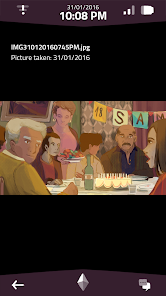
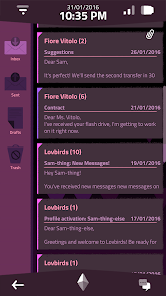
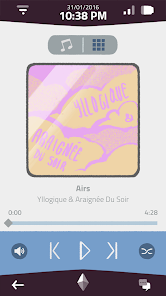
There’s no avatar to control, no dialogue choices, no branching paths. Instead, you’re given complete access to Lauren’s digital world—her diary app, her music playlist, her hidden folder of letters, her Instagram stories, her encrypted notes. It’s not a game in the traditional sense. It’s an experience.
🔍 Why It Works: The Power of Intimacy
The genius of A Normal Lost Phone lies in its emotional realism. Every detail feels true:
- A text from her best friend: "Lauren, you said you’d come to the party. Where are you?"
- A photo of her laughing with her younger brother, captioned: "He still thinks I’m his superhero."
- A voicemail buried in her voice memo folder, cut off mid-sentence: "I just... I can’t keep pretending anymore..."
These aren’t plot devices—they’re human moments, raw and unfiltered. And that’s what makes them so powerful.
You don’t just solve a mystery. You witness a life unravel.
🧩 The Investigation: Piecing Together a Life
The game unfolds in real-time through a series of discovered fragments. No hand-holding. No tutorials. Just you, the phone, and the growing sense that something terrible happened—just before her 18th birthday.
As you dig deeper, you uncover:
- A strained relationship with her father, hinted at through exchanged texts and a deleted voicemail.
- A secret relationship with another girl, now hidden in a password-protected folder.
- A journal entry that contradicts her social media image—where she writes: "I don’t feel like me anymore."
- And finally, a final message, sent from her phone at 11:47 PM on the night she disappeared:
"I’m sorry. I can’t do this anymore."
No explanation. No closure. Just silence.
💔 Themes That Echo Beyond the Screen
A Normal Lost Phone doesn’t just ask, “What happened to Lauren?”
It asks, “What does it mean to disappear?”
- Identity: Who are we when no one’s watching? When the world only sees the version of us we post online?
- Privacy: How much of someone’s truth can you see through a screen? And how much do you have a right to see?
- Grief: The game doesn’t give you a solution. It gives you empathy. And that’s more powerful.
You don’t just solve the mystery—you grieve it.
🔄 The Game Doesn’t End When You Close It
This is the most chilling part.
After finishing the story, you close the app.
But the phone stays in your hand.
You check your own messages. You look at your own photos. You wonder:
- Could I have missed something?
- What if I had found her?
- What if I was the one who should’ve answered?
The game doesn’t fade. It lingers.
It forces you to reflect on your own digital footprint, your own relationships, your own silences.
✅ Why You Should Play It
- For the story: A rare blend of emotional depth and narrative precision.
- For the experience: A masterclass in how video games can be art.
- For the reflection: A mirror held up to your own life, relationships, and the way we present ourselves online.
- For the silence: The quiet that follows the last message—more powerful than any twist.
🌙 Final Thought
A Normal Lost Phone is not about finding a missing person.
It’s about remembering one.
And in a world where lives are constantly being performed online, that may be the most meaningful thing of all.
“You were never meant to find her.
You were meant to understand her.”
🎧 Pro Tip: Play it alone. In the dark. With headphones.
Because sometimes, the most powerful stories are the ones that whisper—and stay with you long after the screen goes black.
A Normal Lost Phone – not a game.
A memory.
A mirror.
A farewell.