For the past several generations, AMD has been striving to compete with Nvidia at the high end of the graphics card market. However, with the launch of the AMD Radeon RX 9070 XT, Team Red has shifted its focus. Instead of challenging the ultra-high-end RTX 5090, AMD has concentrated on delivering the best graphics card for the majority of gamers—and they've succeeded brilliantly.
The AMD Radeon RX 9070 XT, priced at $599, delivers performance that rivals the $749 GeForce RTX 5070 Ti. This alone positions it as one of the top GPUs on the market today, but AMD enhances its appeal with the introduction of FSR 4, marking the first time AI upscaling has been featured in an AMD graphics card. This makes the RX 9070 XT an excellent choice for 4K gaming, especially for those who aren't willing to spend $1,999 on the RTX 5090.
Purchasing Guide
----------------The AMD Radeon RX 9070 XT will be available starting March 6, with a starting price of $599. Be aware that prices may vary due to third-party offerings that might be priced higher. Aim to purchase one for under $699 if possible.
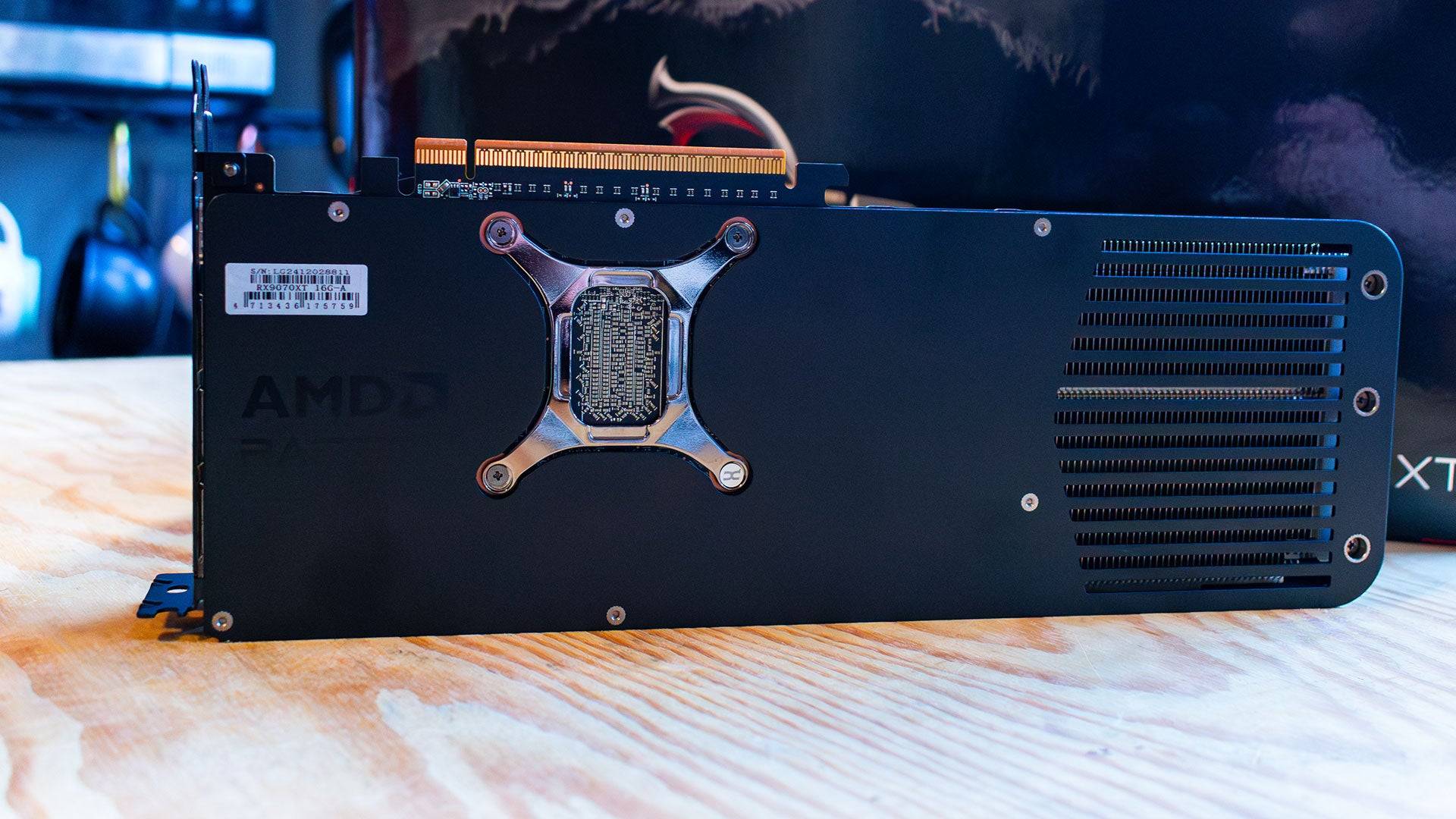
AMD Radeon RX 9070 XT – Photos
 4 Images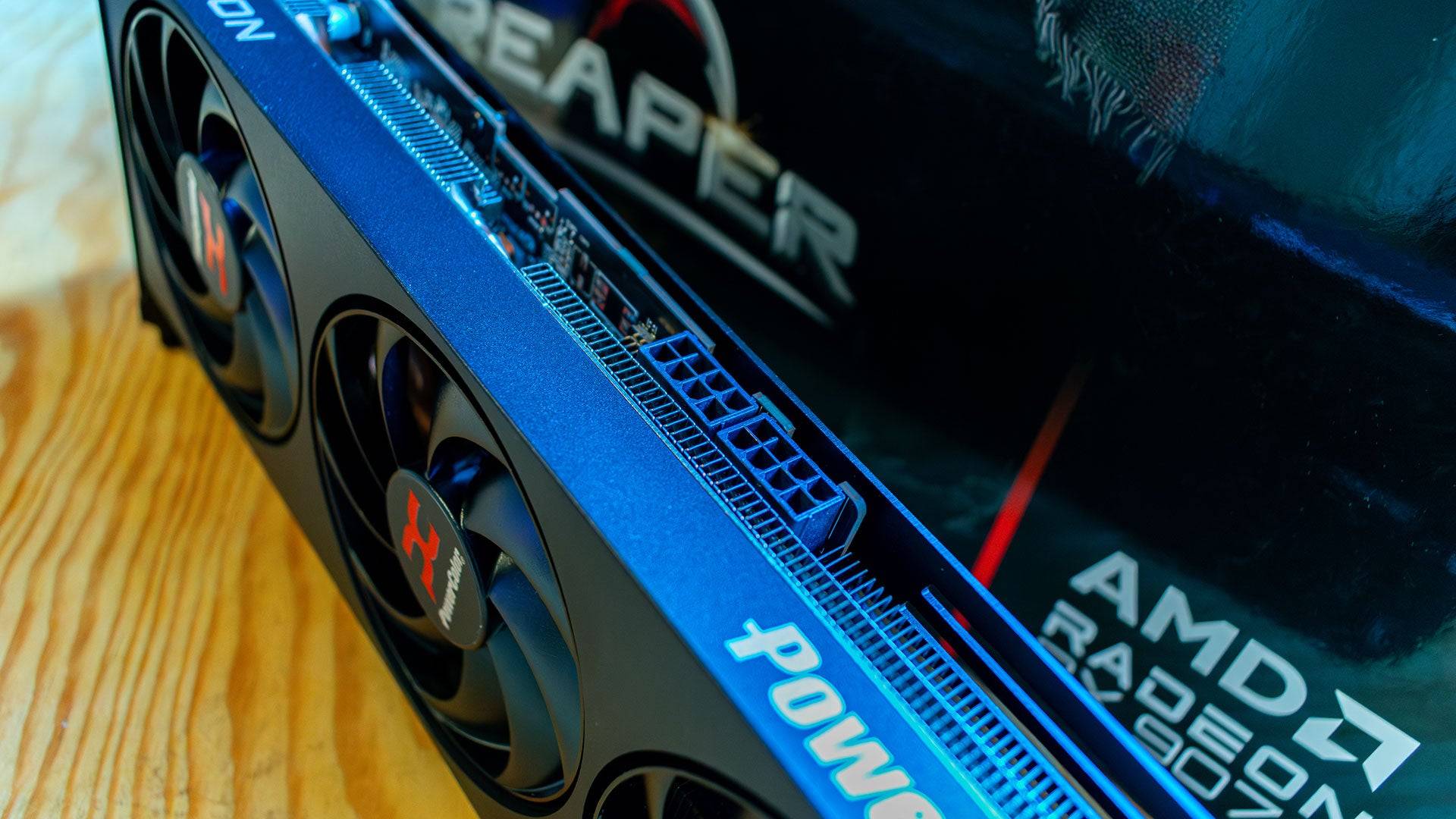
Specs and Features
------------------Built on the RDNA 4 architecture, the AMD Radeon RX 9070 XT showcases significant enhancements, particularly in its RT and AI Accelerators. The AI Accelerators are crucial for powering FidelityFX Super Resolution 4 (FSR 4), AMD's first venture into AI upscaling. While FSR 4 may not boost framerates over FSR 3.1, it significantly improves image accuracy, enhancing overall visual quality. For those prioritizing performance over image quality, the Adrenalin software offers a toggle to disable FSR 4.
AMD has also improved the efficiency of the shader cores, allowing the RX 9070 XT to outperform its predecessor, the Radeon RX 7900 XT, despite having fewer Compute Units (64 vs. 84). With 4,096 Streaming Multiprocessors, 64 ray accelerators, and 128 AI accelerators, the RX 9070 XT achieves a notable generational leap at a more affordable launch price.
However, the RX 9070 XT comes with less memory than the RX 7900 XT, featuring 16GB of GDDR6 on a 256-bit bus compared to 20GB on a 320-bit bus. While this represents a reduction in capacity and bandwidth, it's still sufficient for most 4K gaming needs.
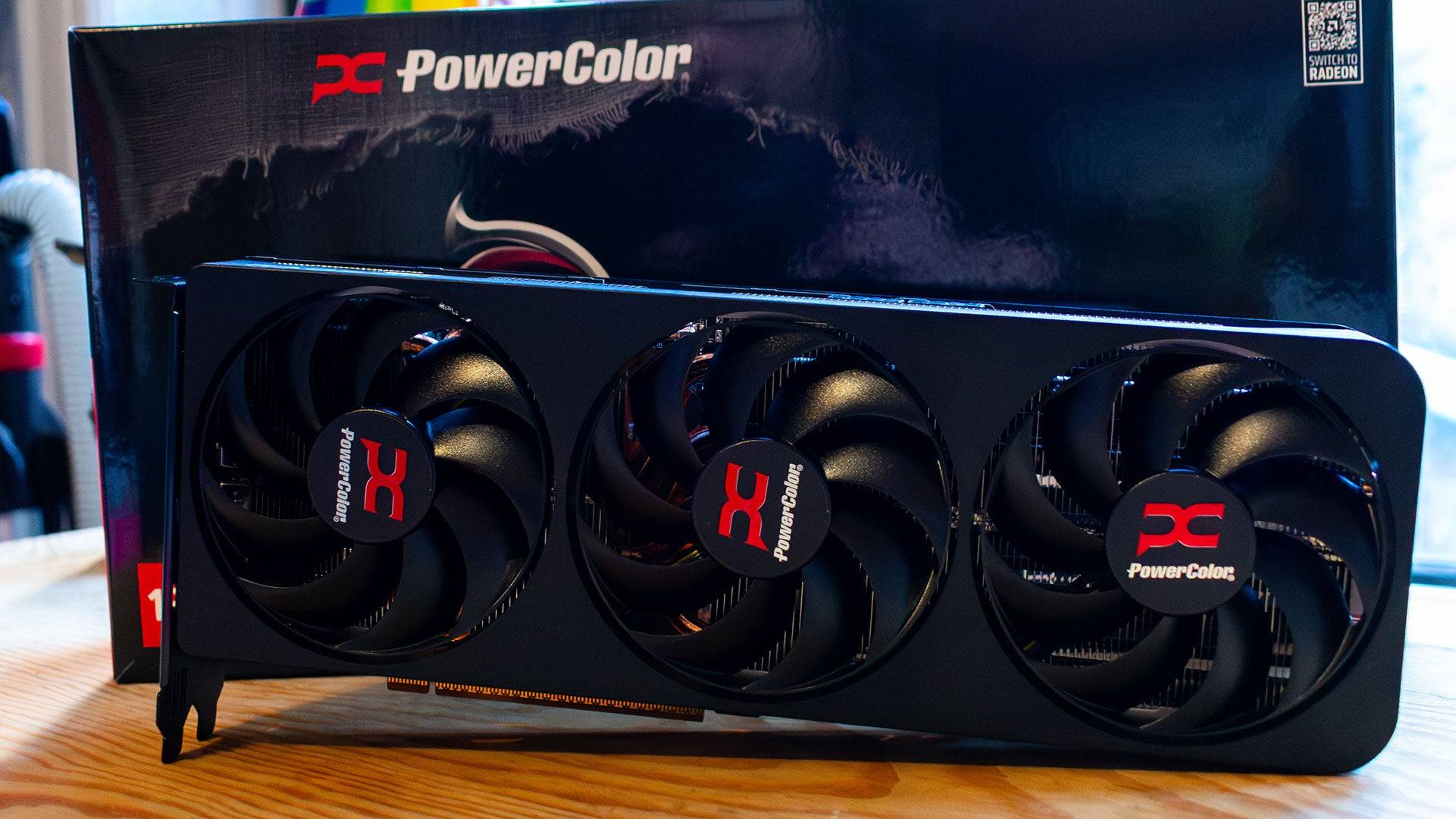
The RX 9070 XT's power budget is slightly higher at 304W compared to the 7900 XT's 300W. Interestingly, my testing showed the 7900 XT consuming more power, peaking at 314W against the 9070 XT's 306W. The power requirements are standard for modern GPUs, ensuring manageable cooling solutions. AMD isn't releasing a reference design for the RX 9070 XT, so buyers will depend on third-party manufacturers. I tested the Powercolor Radeon RX 9070 XT Reaper, which features a compact triple-fan design and maintained temperatures at 72°C during my tests.
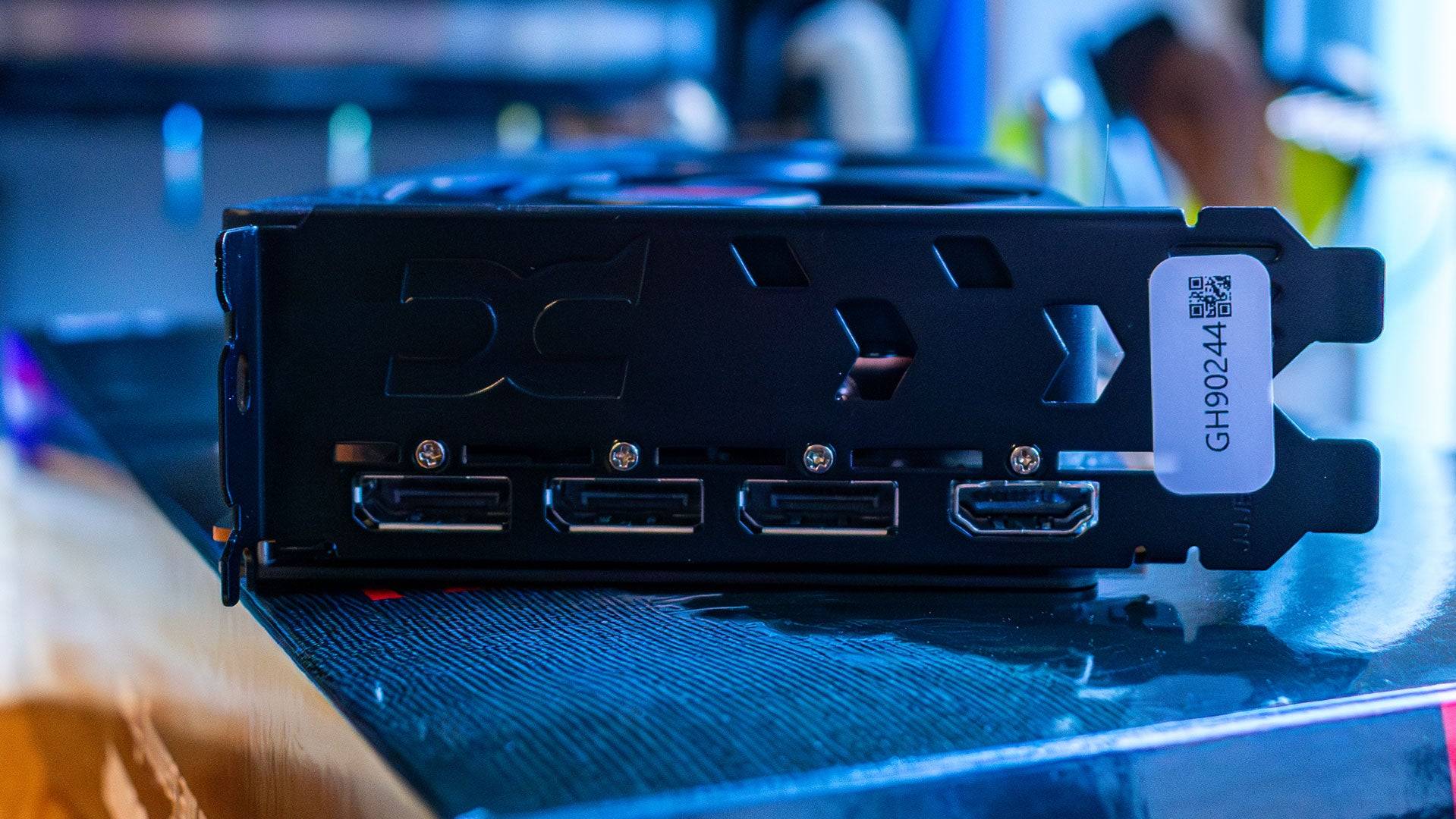
The RX 9070 XT uses standard power connectors, requiring two 8-pin PCI-E connectors, making it an accessible upgrade for most users with a 700W power supply. It includes three DisplayPort 2.1a and one HDMI 2.1b port, though the addition of a USB-C port would have been a welcome enhancement.
FSR 4
-----For years, AMD has sought an AI upscaling solution to rival Nvidia's DLSS. While previous versions of FidelityFX Super Resolution offered strong performance, they struggled with ghosting and fuzziness. The Radeon RX 9070 XT introduces FSR 4, which uses AI accelerators to analyze previous frames and game engine data, upscaling lower-resolution images to native resolution. This results in better image quality than FSR 3, albeit with a slight performance hit.
In Call of Duty: Black Ops 6 at 4K Extreme settings with FSR 3.1 set to "Performance," the RX 9070 XT achieved 134 fps. Switching to FSR 4 reduced this to 121 fps, a 10% performance drop, but with improved image quality. Similarly, in Monster Hunter Wilds, the 9070 XT managed 94 fps at 4K max settings with FSR 3 and ray tracing, dropping to 78 fps with FSR 4—a 20% decrease. This performance trade-off is expected due to the increased workload of AI upscaling, and AMD emphasizes the improved image quality as compensation. FSR 4 is an opt-in feature, easily disabled in the Adrenalin software if needed.
AMD Radeon RX 9070 XT & 9070 – Benchmarks
 11 Images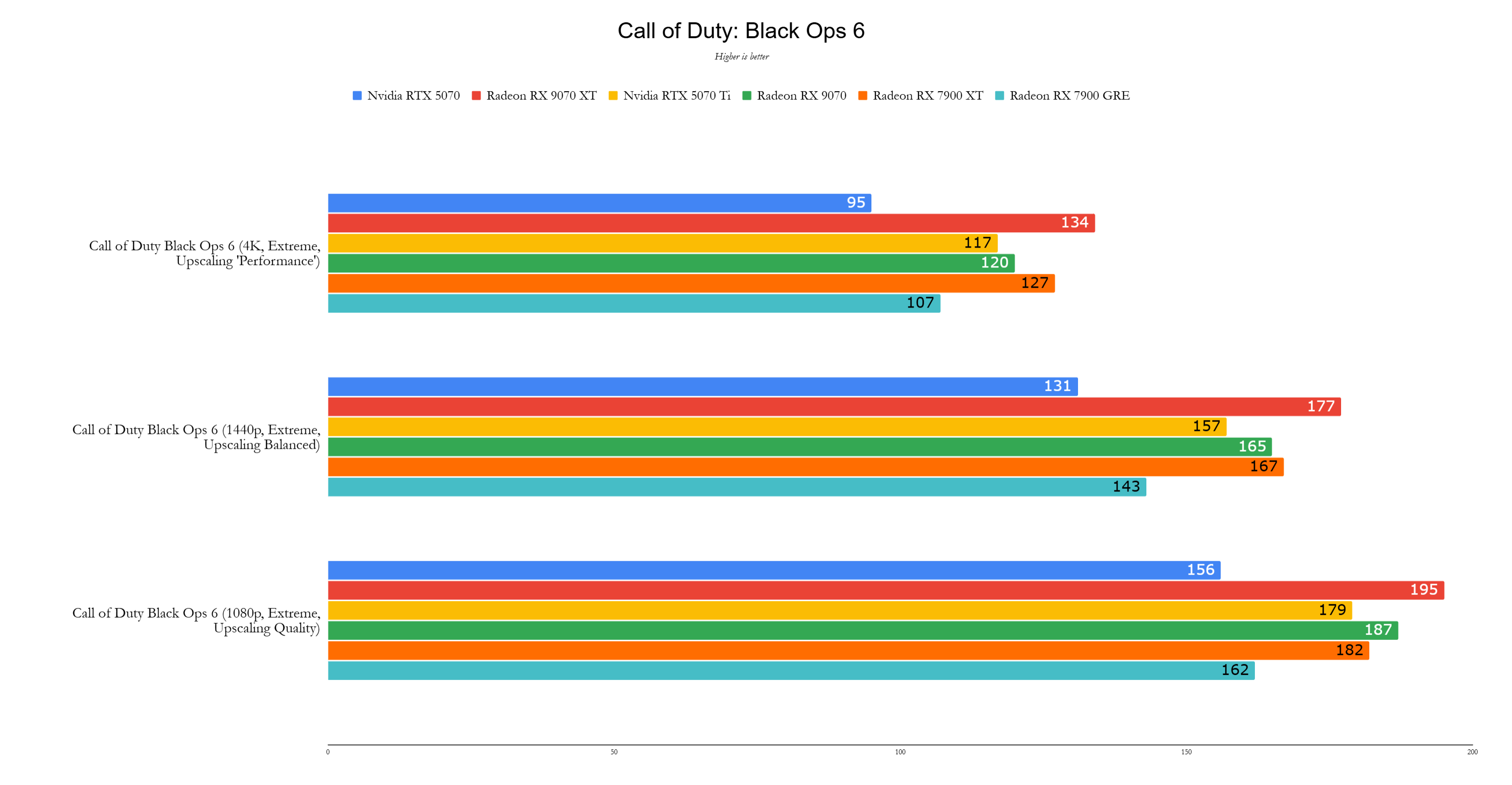
Performance
-----------The AMD Radeon RX 9070 XT delivers exceptional performance, priced at $599, it undercuts the Nvidia GeForce RTX 5070 Ti by 21% while being, on average, 2% faster. Although the RTX 5070 Ti outperforms the RX 9070 XT in some games, the competition between these two GPUs is a significant achievement for AMD.
Across my test suite, the RX 9070 XT proved to be about 17% faster than the RX 7900 XT, which launched at $899 two years ago, and 2% faster than the RTX 5070 Ti. Its prowess is especially evident at 4K, where it maintains its lead, making it an outstanding entry-level 4K graphics card, even with ray tracing enabled.
All graphics cards were tested with the most recent drivers available. Nvidia cards were tested with Game Ready Driver 572.60, except for the RTX 5070, which used review drivers. AMD cards were tested with Adrenalin 24.12.1, except for the Radeon RX 9070 XT and RX 9070, which were tested on pre-release drivers provided by AMD.
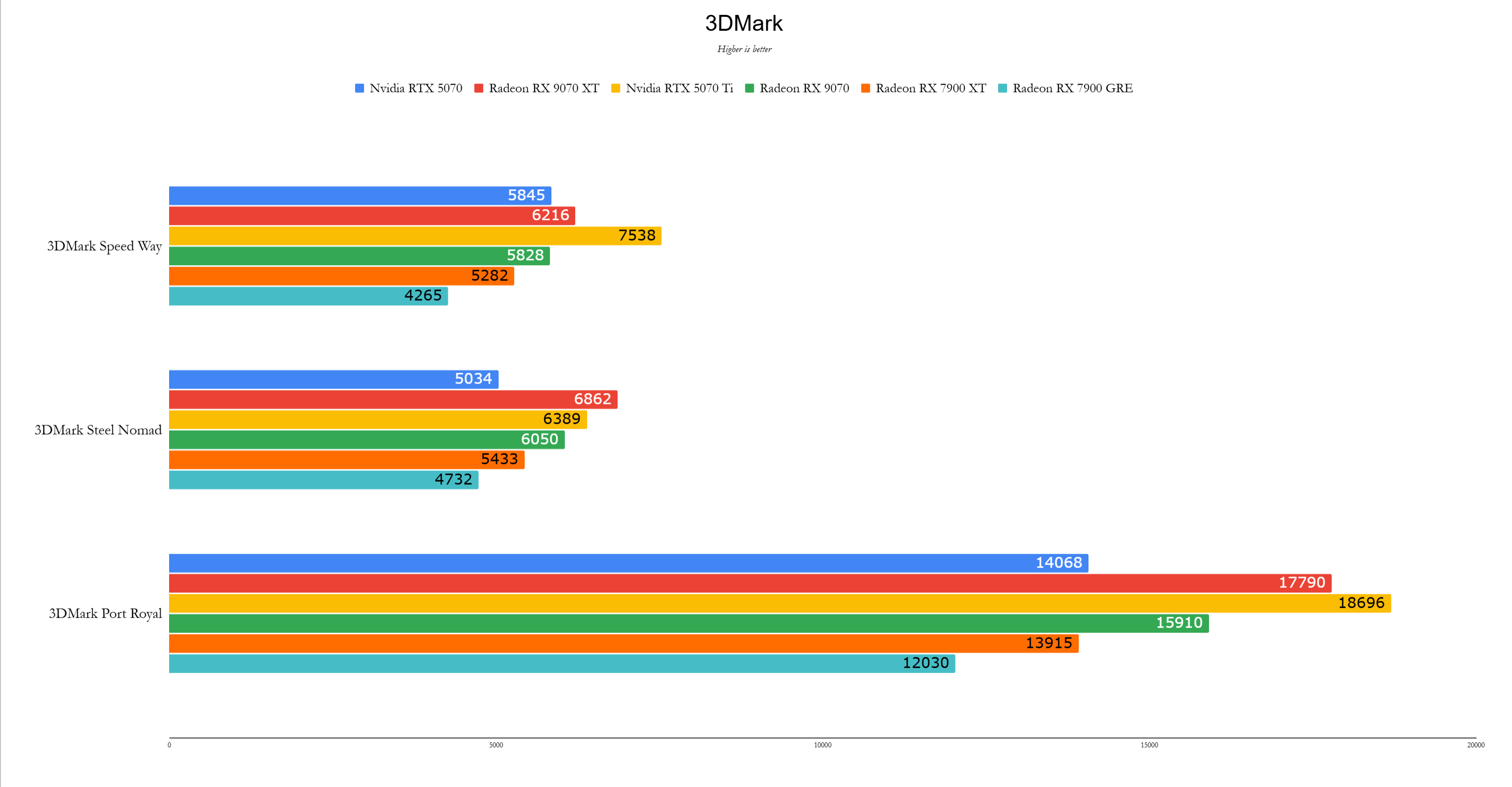
3DMark, while not a playable game, provides a good benchmark for comparing graphics card potential. The RX 9070 XT outperformed the 7900 XT by 18% in Speed Way, though it lagged 18% behind the RTX 5070 Ti. In the Steel Nomad benchmark, the performance gap widened to a 26% improvement over the 7900 XT, and the RX 9070 XT even surpassed the RTX 5070 Ti by 7%.
Test System
CPU: AMD Ryzen 7 9800X3D Motherboard: Asus ROG Crosshair X870E Hero RAM: 32GB G.Skill Trident Z5 Neo @ 6,000MHz SSD: 4TB Samsung 990 Pro CPU Cooler: Asus ROG Ryujin III 360In Call of Duty: Black Ops 6, the RX 9070 XT led the RTX 5070 Ti by 15%, showcasing AMD's strength in this game. The RX 7900 XT was only 6% slower than the new card, indicating AMD's consistent performance.
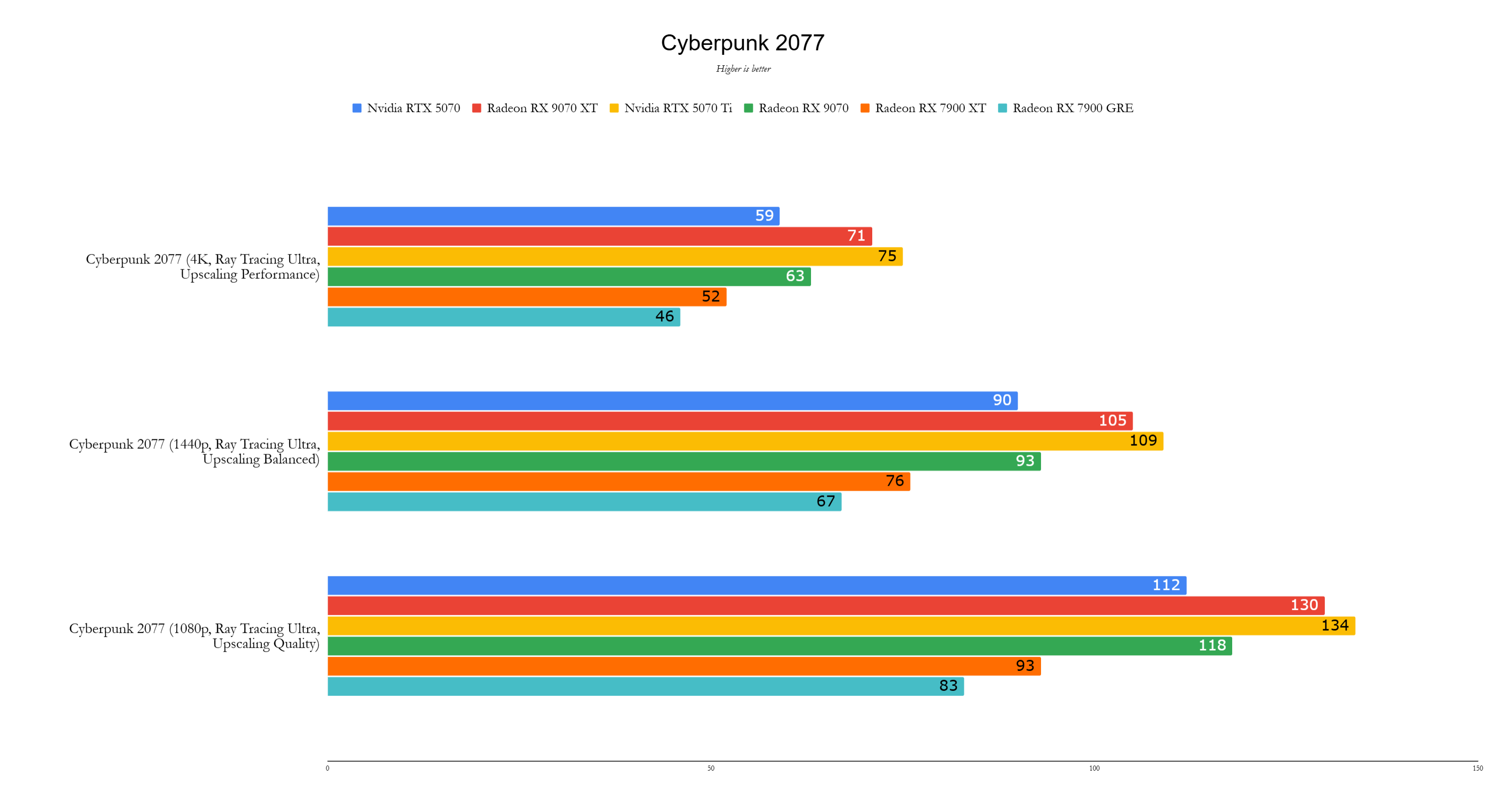
Cyberpunk 2077, traditionally favoring Nvidia, saw the RTX 5070 Ti only 5% ahead of the RX 9070 XT at 4K with Ray Tracing Ultra and FSR 3 in performance mode. This narrow margin is impressive given the significant price difference.
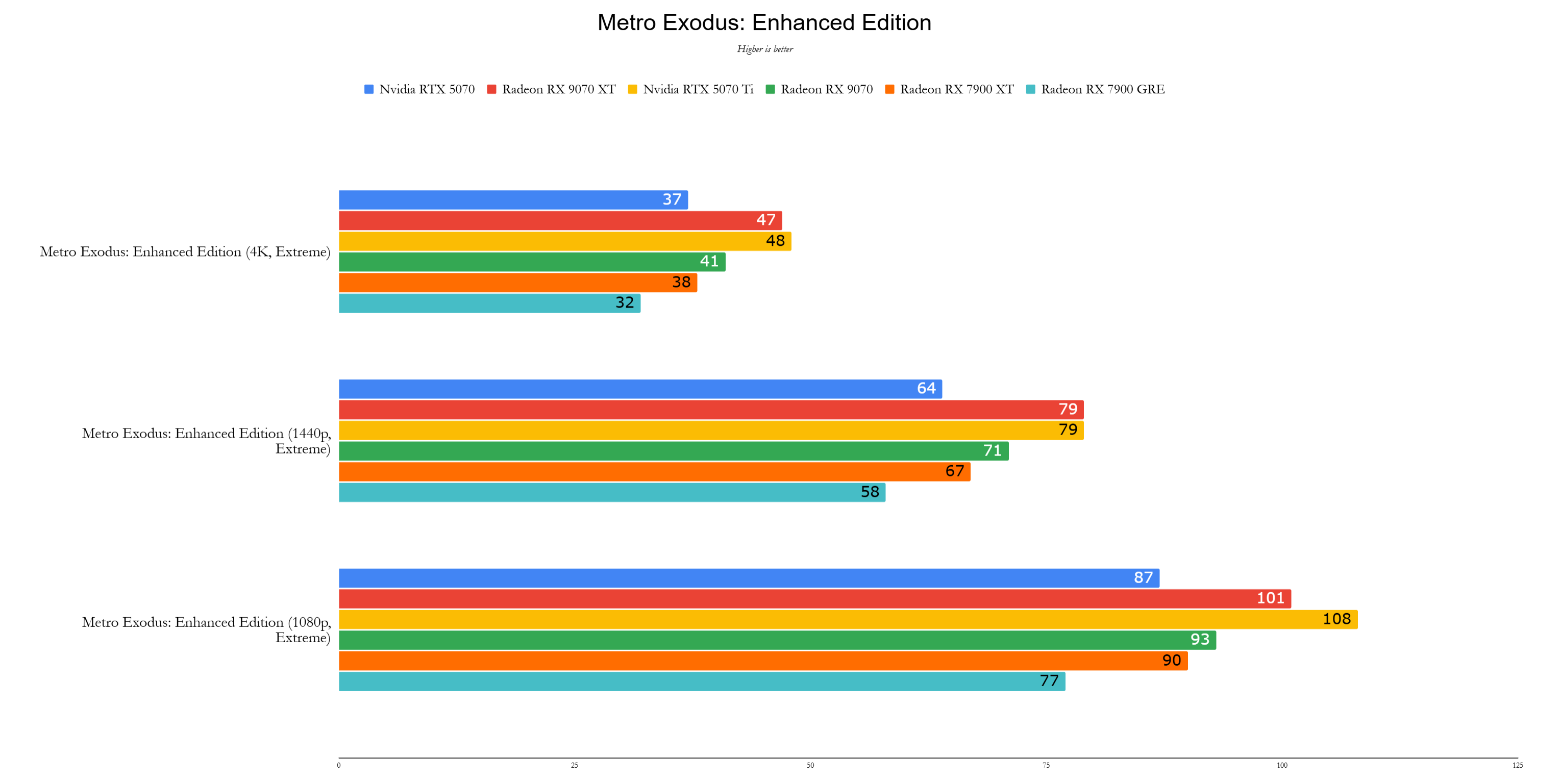
Metro Exodus, tested without upscaling, saw the RX 9070 XT achieve 47 fps at 4K, nearly matching the RTX 5070 Ti's 48 fps. The RX 7900 XT lagged behind with 38 fps, highlighting a 24% performance increase in the newer model.
Red Dead Redemption 2 showcased strong Vulkan performance on the RX 9070 XT, achieving 125 fps with all settings maxed, outpacing the RTX 5070 Ti's 110 fps and the RX 7900 XT's 106 fps.
The RX 9070 XT faced a setback in Total War: Warhammer 3, where it trailed the RTX 5070 Ti by 13% and was only slightly ahead of the RX 7900 XT. However, it bounced back in Assassin's Creed Mirage, achieving 163 fps compared to the RTX 5070 Ti's 146 fps and the RX 7900 XT's 150 fps.
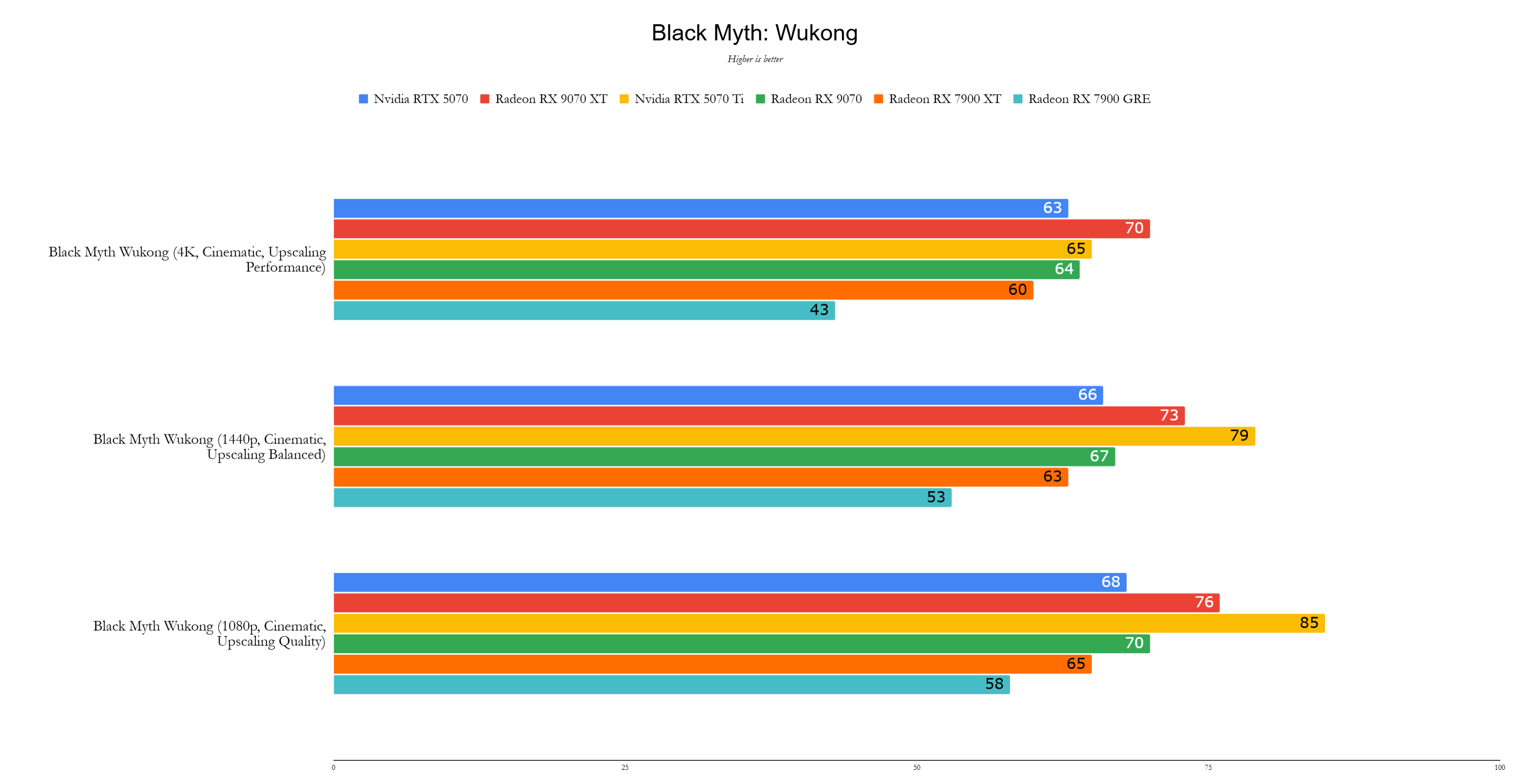
In Black Myth Wukong, the RX 9070 XT achieved a surprising win, with 70 fps at 4K with the Cinematic Preset and FSR at 40%, compared to the RTX 5070 Ti's 65 fps. This marks a significant improvement over the RX 7900 XT's 60 fps, highlighting the advancements in ray tracing capabilities.
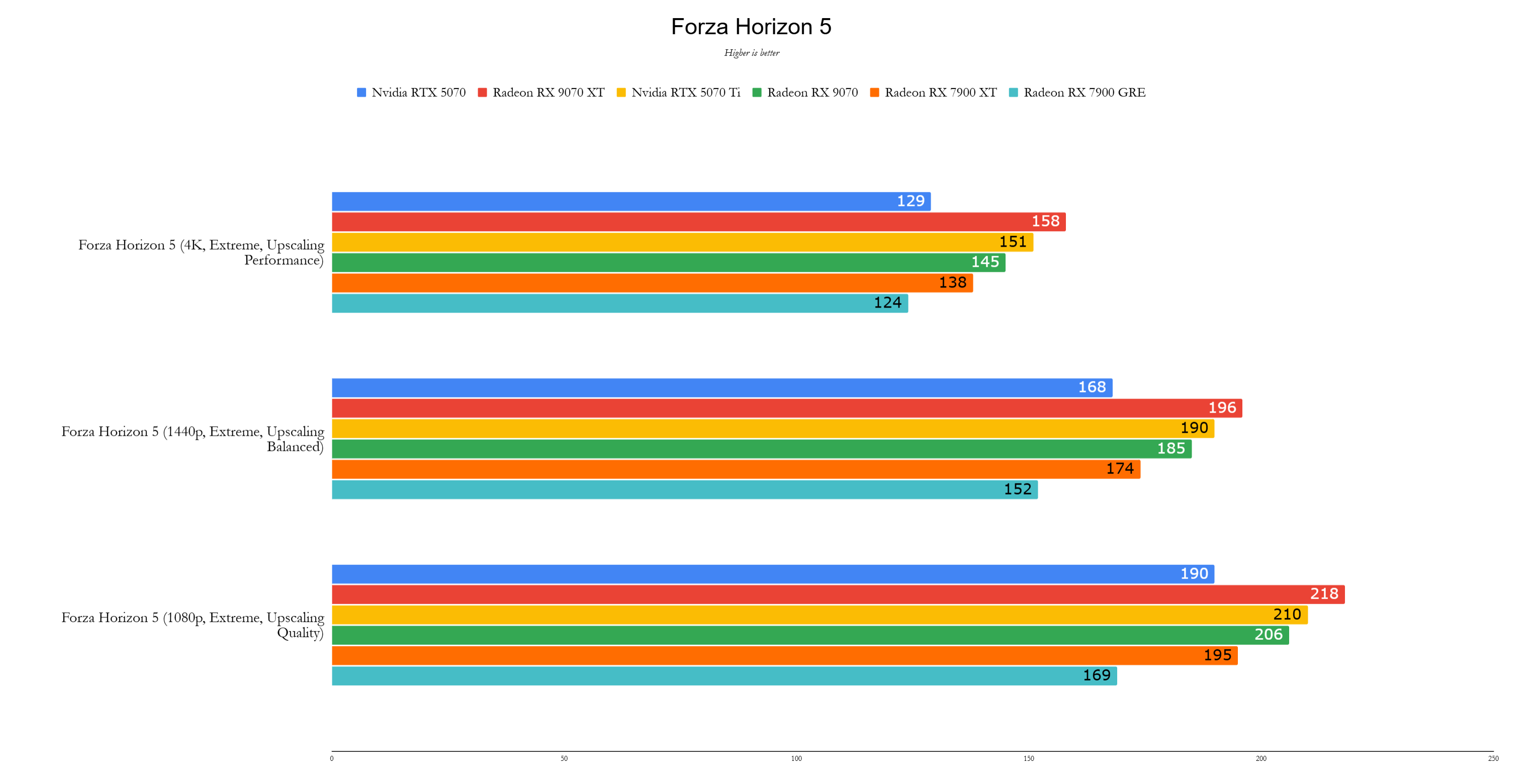
Forza Horizon 5 saw the RX 9070 XT edge out the RTX 5070 Ti with 158 fps compared to 151 fps, a modest but notable improvement.
The Radeon RX 9070 XT, quietly announced at CES 2025, seems to be AMD's strategic move against Nvidia's Blackwell series. Priced at $599, it brings a sense of rationality back to the graphics card market. Although not as fast as the RTX 5080 or RTX 5090, those cards are overkill for most users and significantly more expensive.
The RX 9070 XT feels like a return to the days of the GTX 1080 Ti, which was the fastest consumer card when it launched at $699 in 2017. While the RX 9070 XT may not claim the title of the fastest card, it's undoubtedly the first worthy flagship we've seen in a while.